Short answer: a freezer that has stopped holding temperature is rarely a dead compressor. In most of the calls we take across Chicago it is a defrost system that has let ice choke the evaporator coil, an evaporator fan that quit spinning, a condenser coil fouled to the point the compressor cannot shed heat, or a thermostat that drifted off its set point. Which one it is changes the repair from a two-hour fix to something bigger, and the honest answer comes from the freezer in front of us, not from a guess over the phone.
Chest freezer or upright: the failure is different by type
The first thing a tech settles is which kind of freezer you own, because chest freezers and upright freezers fail in different ways. A chest freezer - the deep box with the hinged lid, the kind parked in a Beverly basement or a Garfield Ridge garage next to a bulk meat order - is a simpler machine. Most chest models are manual-defrost and run a compressor and thermostat with very little else to go wrong, which is why a chest that stops getting cold usually points to a start relay, a thermostat, a worn lid gasket, or the compressor itself. An upright freezer, by contrast, is built much closer to a refrigerator: most are frost-free, which means they carry a defrost heater, a defrost thermostat, a defrost timer or control board, and an evaporator fan behind the back panel. All of that extra machinery is where upright failures hide. A frost-free upright that is suddenly wall-to-wall ice or that runs but never gets the food hard is telling you one of those defrost or airflow parts has failed, not that the unit is dead.
The frost buildup that is really a defrost failure
If your upright freezer has been frost-free for years and you now find ice caked across the interior, the frost is not the problem - it is the symptom. Frost-free freezers run a defrost cycle on a schedule: a heater comes on periodically to melt the ice off the evaporator coil, a thermostat ends the cycle once the coil clears, and a timer or board starts it again. When that system fails - the heater burns out, the thermostat sticks, or the timer stops advancing - the coil slowly becomes a block of ice, airflow through it dies, and the freezer can no longer pull heat out of the food compartment even though the compressor is running fine. The result is a freezer that runs constantly, sounds like it is working, and still thaws your groceries. A technician can confirm a choked coil in minutes and replace the failed heater, thermostat, or timer in a single visit; a homeowner who only sees the frost has no way to know the compressor is innocent.
Why a Chicago basement or garage changes the diagnosis
A large share of the dedicated freezers we repair in Chicago do not sit in the kitchen at all. They live in basements - the full basements under the city's brick bungalows and two-flats - or in an unheated garage, a back porch, or a mudroom, and that placement creates two specific problems. The first is dust and grime. A basement or garage is a dirtier environment than a kitchen, and the condenser coil on many chest freezers is exposed at the back or along the bottom, where it pulls in decades of basement dust until the compressor cannot shed heat and runs hot and hard. The second is temperature. A freezer placed in a space that dips toward freezing in a Chicago January has to work against an environment that is closer to its own target, and units not designed for cold-weather installation can struggle to keep a consistent temperature when the garage swings between a warm summer day and a below-zero winter night. If your freezer sits in an unheated garage or porch and has behaved differently as the seasons turned, tell us on the phone - it changes what the tech checks first.
What is safe to check before you call
Three things are worth checking yourself, and they cover a surprising share of what turns out to be a false alarm. First, confirm the temperature dial or digital control was not bumped - a setting accidentally moved to a warmer position is the most common "it stopped freezing" call there is. Second, check the lid or door gasket: a worn, cracked, or ice-packed seal lets warm air leak in continuously, forcing the compressor to run and slowly raising the interior temperature. Third, if the condenser coil is reachable, vacuum the dust off it - on a chest freezer with exposed coils this alone sometimes restores a unit that has been running warm for months. If the freezer is warm but making no sound at all, or hums without ever getting cold, that is past a DIY check: those point at the start relay or compressor and need a technician with a multimeter. And if there is ice you cannot account for in a frost-free upright, do not chip at it with anything sharp - the evaporator coil sits just behind that frost, and puncturing it vents the sealed refrigerant system and turns a modest repair into a much larger one.
The food-loss math and how fast it matters
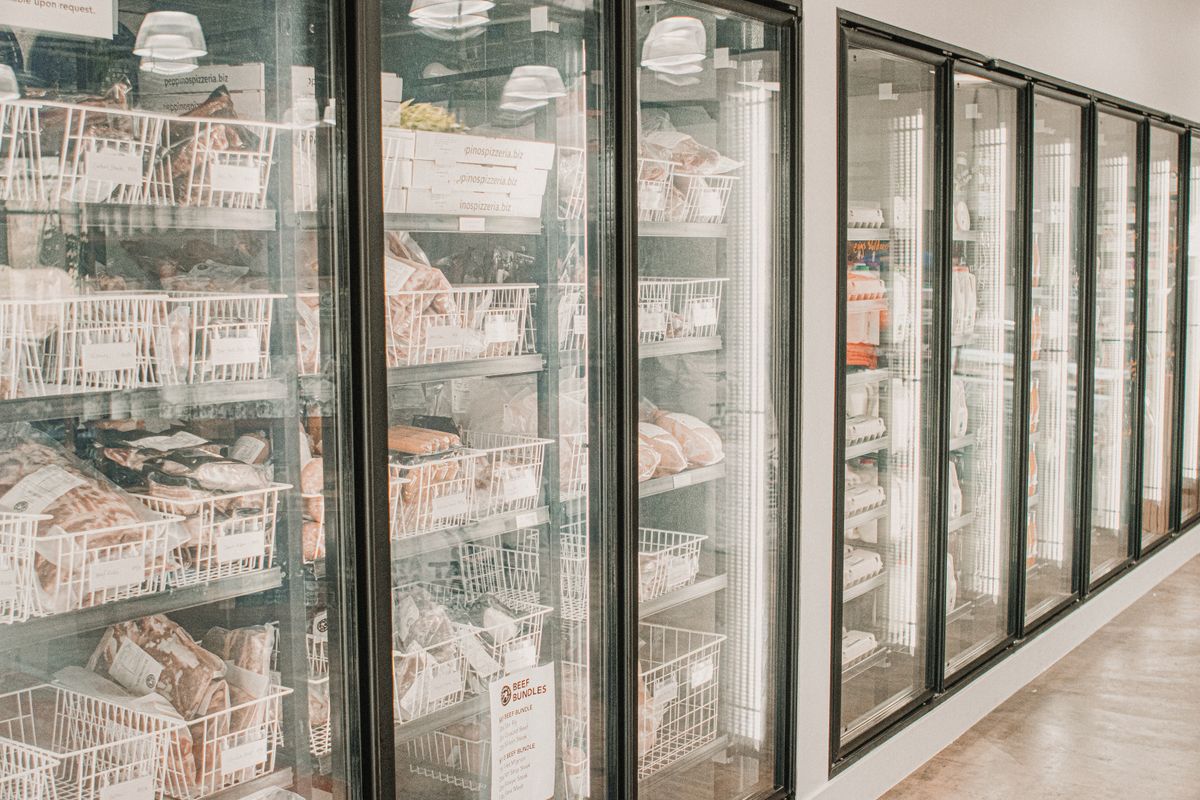
A full freezer holds cold far better than an empty one - the frozen food itself acts as thermal mass - but the clock still matters. A closed, full freezer generally stays cold enough to keep food safe for roughly two days without power, while a half-full unit may only hold for about a day, and once the interior climbs above roughly 40 degrees Fahrenheit for more than a couple of hours, safety rules of thumb say the thawed food should go. That is why a freezer that is not recovering is worth treating as an urgent call rather than a "whenever you can" one: every hour you wait, more of a bulk meat order or a summer's worth of garden produce moves closer to the bin. We treat freezer calls as a priority for exactly that reason, and most repairs that are a relay, a thermostat, a defrost part, a fan, or a gasket finish on the first visit, before the load is lost.
Repair versus replace, applied to a real freezer
The honest call depends on the type, the age, and the price of the part. A chest freezer is an inexpensive machine - a comparable new one is often a few hundred dollars - so the bar for repair is low: if the compressor or sealed system is gone on an older chest, replacement usually wins, because you are putting a large share of a new unit's price into an old cabinet. On an upright, the same math leans further toward repair, because a frost-free upright costs more to replace and a failed defrost heater, thermostat, timer, or evaporator fan is a modest, high-value fix at almost any age. A start relay on either type is a cheap, quick repair that almost always makes sense. As a general guide, we weigh the quoted figure against the price of a comparable replacement: when the repair approaches half the cost of a new freezer and the existing unit is well into its expected ten-to-fifteen-year lifespan, a new unit starts to be the better money, and we will say so plainly rather than sell you a repair that does not hold up.
What a single visit gets done, and how to speed it up
Our trucks carry the failures we see most on Chicago freezers - start relays, thermostats, defrost heaters and thermostats, evaporator fans, and common door and lid gaskets - so most calls finish on the first trip once we know the model. When a repair does need a follow-up, it is almost always a mainboard that is unique to a single model year or a sealed-system job: we diagnose those on the first visit and come back with the part when it arrives. The fastest way to make it a one-visit repair is to have the model number in hand when you call - on a chest freezer it is usually printed on a plate inside the lid or across the back; on an upright, on the door jamb or low on the back panel. And when you book, mention whether the unit is a chest or an upright and whether it sits in a kitchen, a basement, or an unheated garage - that detail tells the tech where to start before the truck even leaves the shop.