Short answer: when an ice maker stops producing, runs slow, or drops hollow, cloudy, or off-tasting cubes, the fault is almost never the ice maker module itself. In most of the Chicago calls we take it is a water inlet valve that will not open, a frozen or clogged fill tube, a water filter the freezer stopped drawing through, a tray or bin thermostat gone wrong, or a freezer that is not cold enough to freeze. Which one it is changes the repair from a ten-minute filter change to a valve or module swap, and the honest answer comes from the machine in front of us, not from a guess off a phone call.
By symptom: what your ice maker is really telling you
No ice at all, and no water ever reaching the tray, points almost always at the supply side - the water inlet valve, its filter screen, the fill tube, or the water filter - rather than at the ice maker itself. Ice that is small, hollow, or layered points at a partial water fill: a valve that is not opening fully, a screen or filter that has scaled over, or a fill tube that is partially frozen. Ice that forms but never drops is a harvest or thermostat problem - the tray does not heat to release the cubes, or the bin thermostat never tells the heater to fire. Ice that is cloudy or tastes off usually comes from the water itself or a filter that is long past due, and in Chicago that second one is common. Ice that forms fine but will not dispense is a separate mechanism again, a chute, auger, or door solenoid rather than anything in the tray. None of these share a fix, which is why guessing at the part before a diagnosis is how ice maker repairs get expensive for nothing.
The water inlet valve: the most common culprit, and the one people misdiagnose
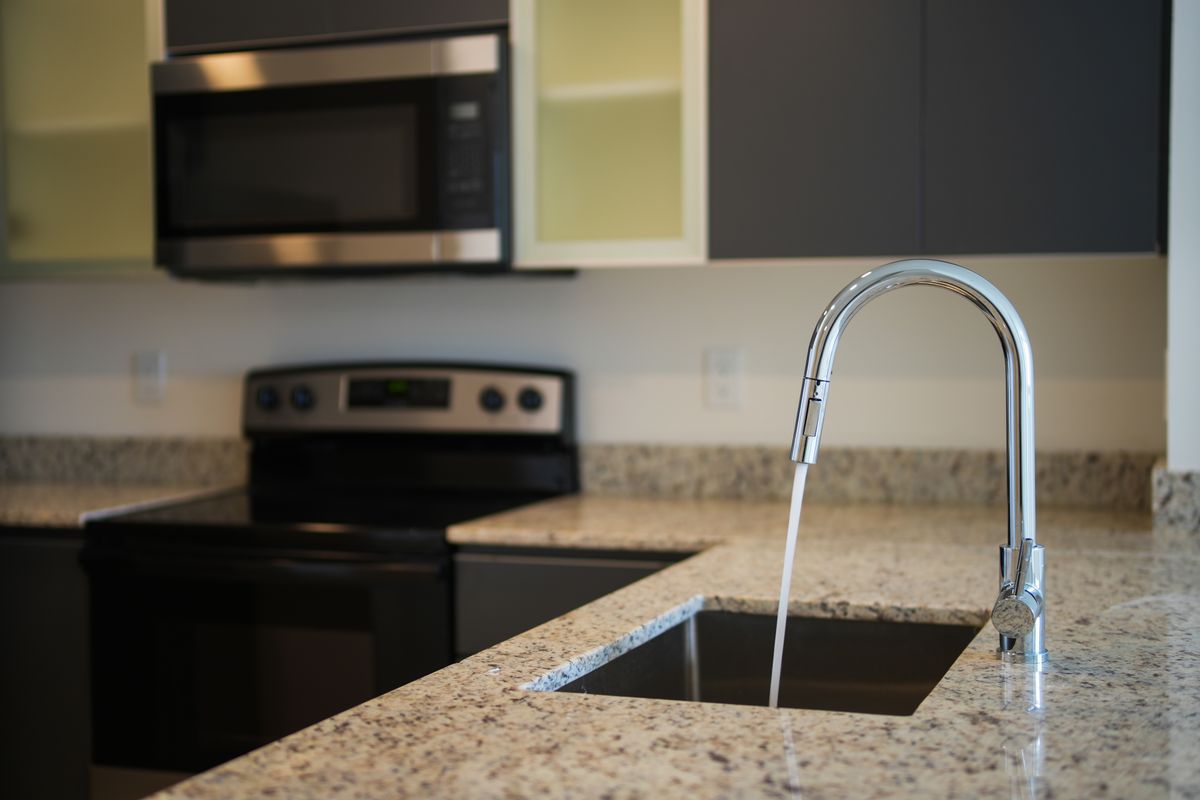
The water inlet valve is a small solenoid-controlled valve on the back of the refrigerator that opens on command to let water into the ice maker tray and, on many models, to the door dispenser. It is the single most common reason an ice maker stops filling, and the failure takes two forms. The first is electrical: the solenoid coil opens, or the valve will not open at all, so no water ever reaches the tray - the classic "the ice maker just stopped one day" with nothing frozen in the tray. The second is mechanical: the valve's inlet screen plugs with debris and scale until it restricts flow to a trickle, which shows up as small, hollow, or layered ice rather than a full stop. The trap is that a homeowner often replaces the valve and the symptom persists, because the real problem was a clogged water filter, a frozen fill tube, or a wiring fault feeding the solenoid - parts a DIY valve swap never touches. That is why we test voltage to the valve coil during the fill cycle and check the screen, filter, and tube before we quote, so we replace the part that is actually failing rather than the one that merely looks guilty.
Why Chicago's hard water is hardest on ice makers
Chicago's municipal water is on the hard side, and dissolved minerals are exactly what an ice maker cannot tolerate. Hard water scales the inlet valve screen, coats the fill cup, leaves cloudy white residue in the tray, and pushes the water filter toward clogging faster than the manufacturer's six-to-twelve-month schedule assumes. The result is a slow but predictable arc: the filter screens less and less, the valve opens less fully, the fill shrinks, and the ice comes out smaller and cloudier until one day it just stops. In Gold Coast and Lincoln Park kitchens - where built-in, panel-front refrigerators dominate and a matching replacement is expensive - the repair-versus-replace math tilts hard toward fixing the supply side, and regular filter changes genuinely prevent most of the calls we take. If you have not changed your refrigerator's water filter in the last six months and the ice has been getting smaller and cloudier, that is the first thing to fix, before any part gets ordered.
The frozen fill tube and the Chicago winter
A frozen fill tube is a second local failure we see every cold season. The fill tube runs from the inlet valve up into the ice maker, and if the freezer is set too cold, or the tube's insulation wears, the small water column in it can freeze solid between fills - blocking the next fill even though the valve works perfectly. It is a diagnosis that a homeowner can sometimes clear by defrosting, but it tends to return if the underlying freezer temperature or the tube's placement is not corrected. And in an unheated garage or back-porch installation - more common than you might think across Beverly, Mount Greenwood, and Garfield Ridge households - a second refrigerator's ice maker can struggle all winter for a different reason: the freezer may read its cold surroundings and never settle into a steady freeze-and-release cycle. If your ice maker behaves differently only in the coldest months, tell us on the phone; it changes where the tech starts.
Simple checks you can do before calling
You can safely knock out four quick checks that account for a surprising number of what turn out to be false alarms. First, confirm the freezer is actually cold - an ice maker will not cycle if the freezer compartment is much warmer than about 10 degrees, so a freezer that has drifted warm stops ice long before you notice the temperature in the main fridge. Second, check the water filter: if it is overdue and the ice has been getting smaller, cloudier, or slower, replace it and give the machine 24 hours before you conclude anything else. Third, check the shut-off arm or the ice maker's on/off setting - a bumped arm or a switch flipped during a recent clean-out stops production with nothing actually broken. Fourth, check whether the tray is full or bridged: ice that has frozen together into one clump in the bin can make the ice maker think it is full. If the tray is empty and the freezer is cold and none of the above applies, that is past a safe DIY check - the inlet valve, the fill tube, and the module wiring all need a multimeter and a live test.
Built-in versus standalone machines
The starting point for a tech is pinning down which kind of ice maker you actually have, because a built-in refrigerator ice maker and a standalone or under-counter ice maker are different machines. A built-in unit - the kind in the fridge that drops cubes into a bin - shares the refrigerator's water supply and control systems, so its failures are the inlet valve, filter, fill tube, and module we have been describing. A standalone ice maker - the box on the counter in a lakefront condo or a basement bar, or the under-counter unit in a renovated kitchen - has its own supply line, its own condensing system, and, frequently, its own drain, and it fails in its own ways: a compressor that will not start, a dirty condenser coil that chokes airflow, a bad ice-thickness probe, or a harvest motor. Telling us whether the unit is built into the fridge or a standalone machine when you call saves the tech a trip and points us at the right half of the machine before we leave.
Repair versus replace, applied to a real ice maker
The honest call depends on the type and the age. On a refrigerator's built-in ice maker, the parts that give out most - the inlet valve, the fill tube, the filter, the module, the bin thermostat - are modest, high-value repairs that almost always make sense to fix, and on a built-in, panel-front fridge the alternative (matching a cabinet opening exactly) is expensive enough that repair wins nearly every time. On a standalone ice maker the same rule applies: a failed valve, probe, or harvest motor is worth fixing on a quality unit, while a dead compressor on an older, inexpensive standalone box is usually the point where replacement beats the repair - the sealed system is labor-intensive to open and a new unit is often only a few hundred dollars. As a general guide, we weigh the quoted figure against the cost of a comparable new unit and say plainly when the repair no longer makes sense, rather than sell you a fix that does not hold up.
How most ice maker visits finish in a single trip
The components that fail most on Chicago ice makers - inlet valves, fill tubes, bin and module thermostats, common modules, and the harvest motors that free cubes on many brands - are what we keep stocked on the van, so the majority of calls are wrapped on the first visit once we confirm the model. A follow-up is needed only when the fault lives in a control board unique to a single model year or in a part for a brand with a thin regional supply chain. The two things that speed every call are a ready model number - printed on a sticker inside the fresh-food compartment or on the back wall - and a note about whether the unit is built into the refrigerator or a standalone machine, plus how recently the water filter was changed. You get a flat price quoted and approved before anything comes apart, and we run the unit through a complete fill-freeze-release cycle after the repair so you can trust the cubes are coming before we leave.